
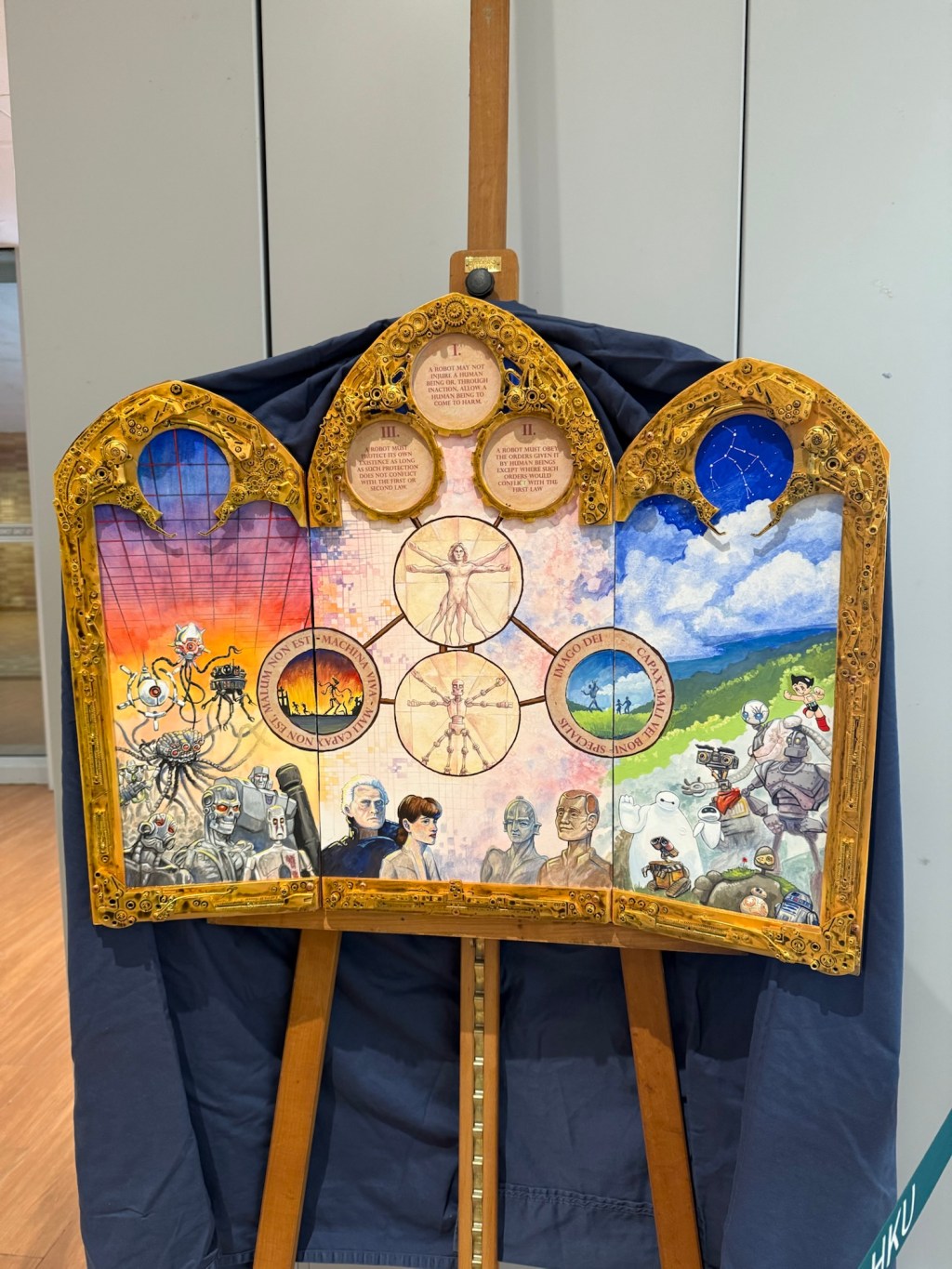
The special thing about academic conferences is that they focus on the convergence of divergent ideas. Academic conferences are a special place of friendly debate, critical thought, and playful exploration. This is a different environment to professional conferences where delegates are investing in something “to take away” with them. There is less emphasis on idea generation and more on communication methods with a professional conference.
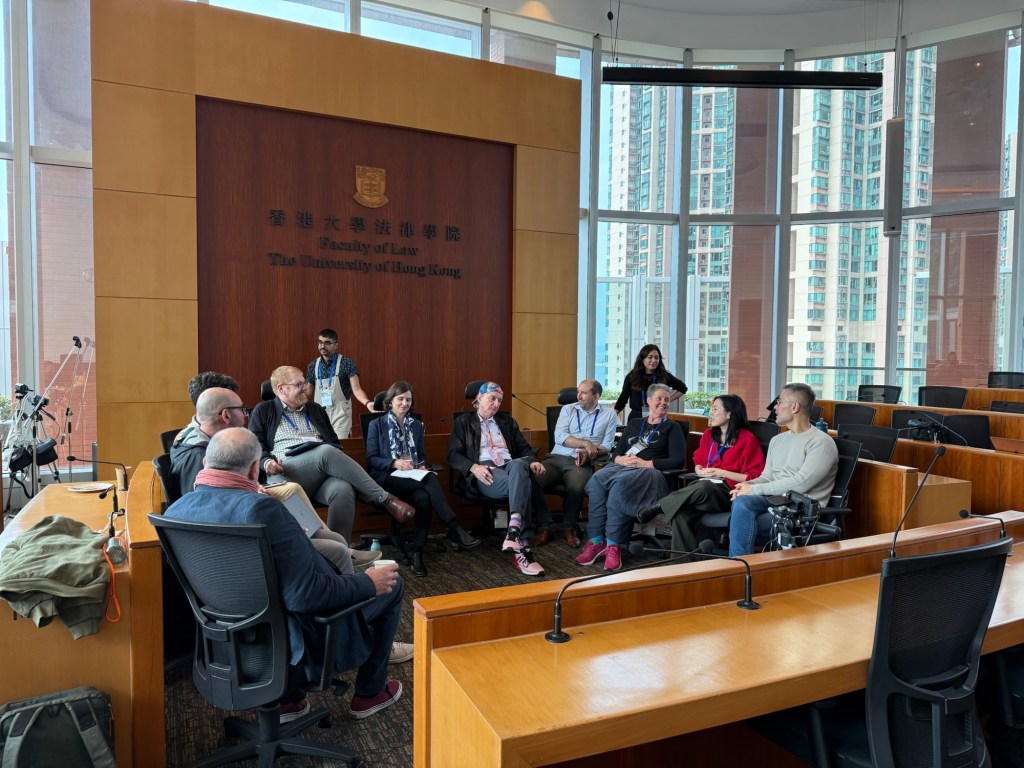
The Law, Literature and Humanities 2024 conference was an academic conference which ticked all the boxes for friendly debate, critical thought and playful exploration.
The format of these conferences work well: a pre-conference day designed for PhD students and early career academics, followed by three days of concurrent streams where papers are presented and discussed or roundtables held.
The PhD Day
By far the highlight of PhD Day at the 2024 conference was the panel on playing with theory. And by play, the panellists really did mean it. The discussion involved the difference between play and game theory, what the play object is in the context of legal theory, and how to take things too far. Professor Peter Goodrich emphasised this point with his story of when he wrote his law thesis in poetry. You can play but you must dress it up in the expected form to get your outputs anywhere. Kathleen Birell and Ben Gooder also contributed to this panel with their wisdom in playing “within the rules” of legal theory in the academy.
Approach [legal theory/life] with good questions rather than satisfactory answers.
This is wisdom that I believe can be universally applied.
Be careful about academic rigour that it doesn’t become rigour mortis.
(Quotes by Peter Goodrich)
Conference Highlights
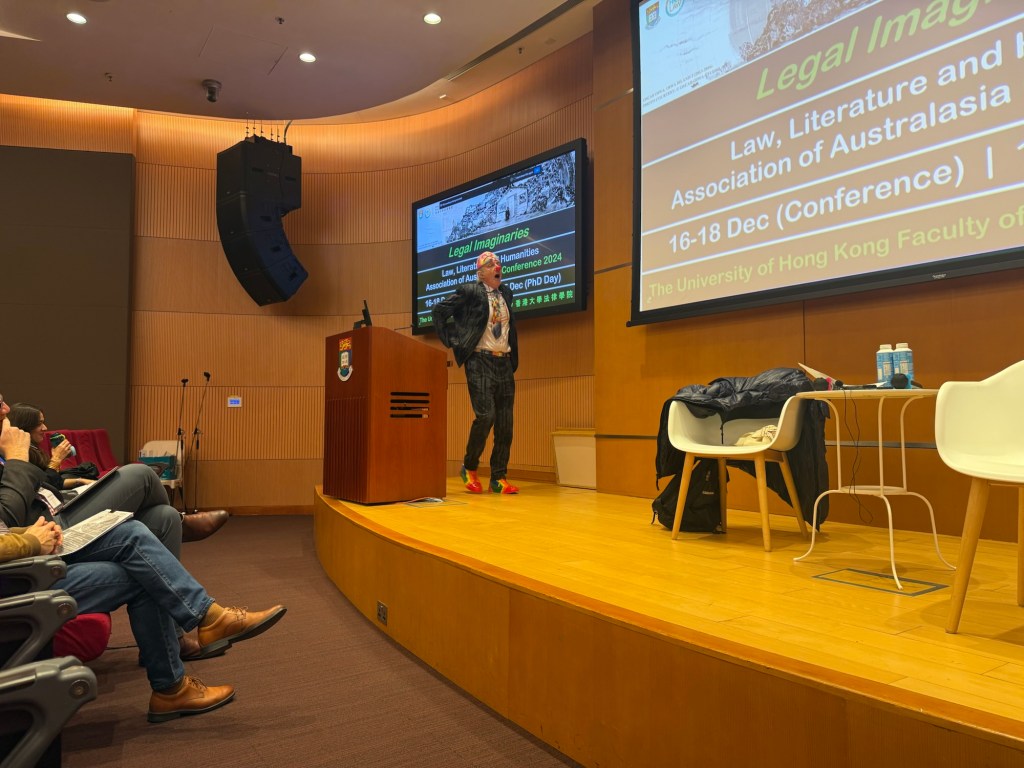
Rather than produce a blow-by-blow daily summary of the conference, this is a simple summary. The keynote by Professor Peter Goodrich was all about inserting levity. This was underscored by the fact that Professor Goodrich presented this keynote whilst dressed as a clown (red nose and all!). His point (I think) is that law schools and legal scholars need to balance out the gravity of legal scholarship with the humour that to the outsider, it is all made up. In many jurisdictions, lawyers wear wigs and funny gowns to present arguments to the judges who are dressed up as 17th century royalty.
Fortune favoured me sufficiently to program my stream Imaginaries and the Future of Legal Professions as one of the first sessions. Due to travel delays and last minute withdrawals, it was just Carolyn McKay and I who presented. We had a lively audience who asked great questions. Carolyn’s presentation was on “Soft, Hard and Wet(ware): The Confluence of Humans and Technologies in Criminal Courts” which focused on her important work on how digital court rooms impact vulnerable people (witnesses and defendants) in the court process.
I was asked the pertinent question: What skills should law schools be teaching law students in this age of AI? I’m still thinking about this one!
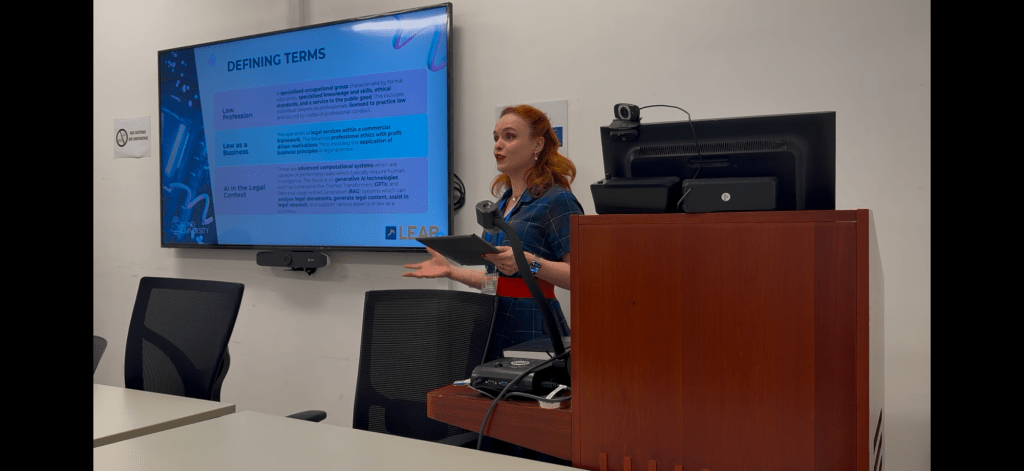
Other sessions I attended covered a broad cross-section of imaginary:
- Forms of life and law, drawing upon art and how these reflect and feedback through Western notions of the rule of law;
- Resisting extractivism, seeking reparations and anti-colonial thought through reframing the Australian colonial project to a debtscape, how non-state corporate powers are effectively perpetrating human rights violations, and where sociological study underscores and undermines anti-colonial theory;
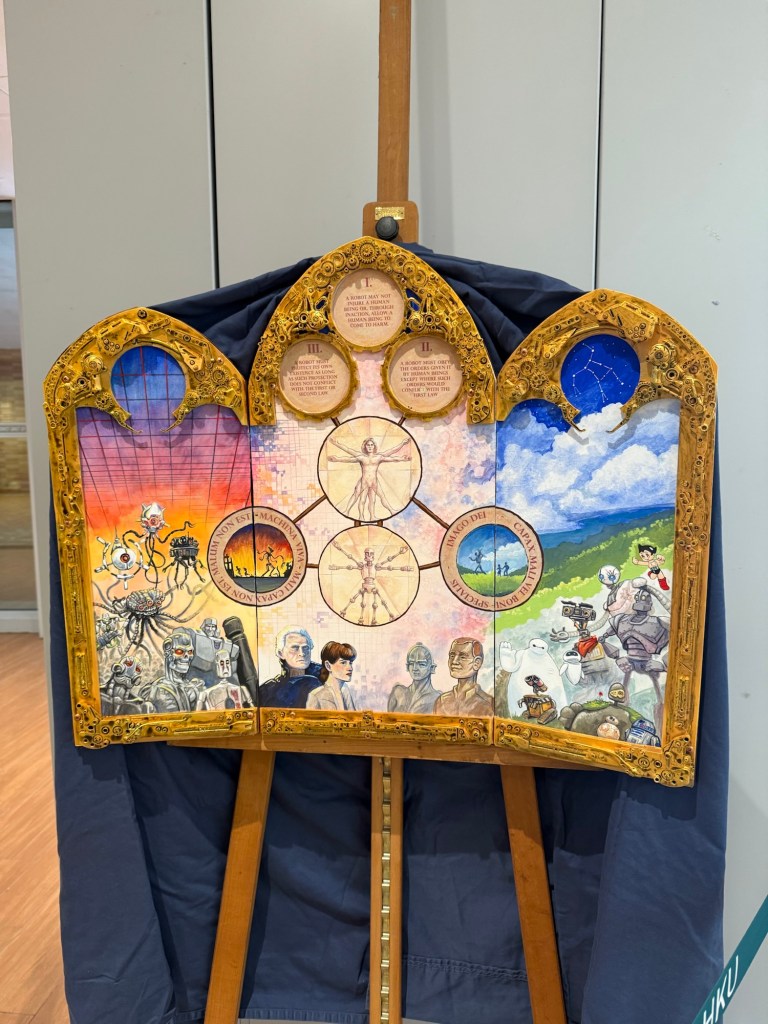
- The law of machines: How Asimov and other sci-fi writers provide lessons about AI regulation (which should not be blueprints).
The conference’s closing keynote by Daniela Gandorfer encapsulated before, against and above, and after the law. Presenting both theoretical and practical concepts, Daniela took us on the journey from the indeterminism of the past and the ever-present need for stability in ungoverned environments. As a form of “not yet”, new governance models have appeared within the capitalist systems. Daniela pointed to the Seasteading Institute as an example where Decentralised Autonomous Organisations (DAOs) form decentralised, self-governing entities outside the usual legal environment.
After the law: What are we waiting for?
Daniela’s presentation invited us to consider the future – to imagine law after itself. There were plenty of discussions afterwards. One clear theme from discussions outside the formal streams was the future of law and humanities in this era where governments are withdrawing humanities funding and support in its current form. More investment is being made in the Science, Technology, Engineering and Mathematics disciplines – leaving law and humanities scholarship to fend for itself.
In my view (and for some that I discussed this with), this is a great opportunity for law and humanities to engage with STEM scholarship in new and creative ways.
Bring on the era of STEAM!
 Chantal McNaught
Leave a reply to Hong Kong Days Three to Five (Chantal) – Law Conference Goodness – Chris and Chantal Cancel reply